

Finding Your Voice: First Lines
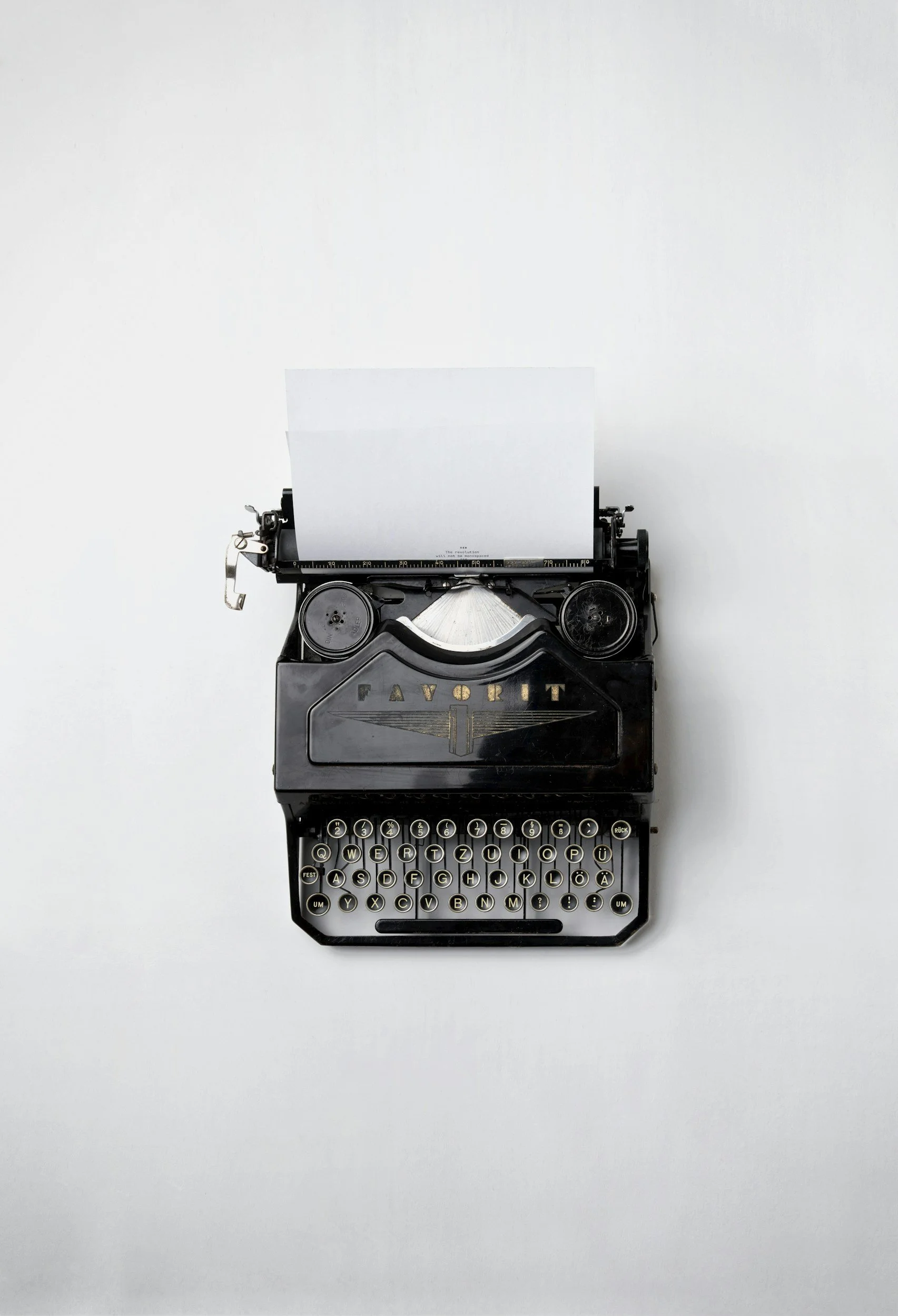
First Line Fridays
Our second Writer’s Nest session was all about beginnings, how to start a story, write a paragraph, and build a world.
Members shared their own “first lines,” and what followed was a lively mix of craft talk, laughter, and a few unexpected detours. Every line was a glimpse into a different mind and rhythm, proof that there’s no single way to invite a reader in.
Why First Lines Matter
The first line of a narrative occupies a unique rhetorical and cognitive space: it is both threshold and invitation. In that single opening gesture, the author performs three simultaneous acts: establishing authority, framing expectation, and initiating desire.
Every story makes a kind of deal with the reader. The first line is where that deal begins. It says, “Here’s the tone, here’s the rhythm, here’s how close or distant I’ll let you stand.” Think of it like the doorway into a house, its style tells you a lot about what might be waiting inside.
Some openings build instant trust with a strong, clear voice:
“Call me Ishmael.” (Moby-Dick)
In three words, we meet a narrator who’s direct, mysterious, and confident enough to start without explanation.
Others create atmosphere or emotion straight away:
“124 was spiteful.” (Beloved)
Morrison makes a house feel alive, angry, haunted, unforgettable, and we sense the story’s pulse before we know what’s happened.
Writers use first lines to trigger curiosity. Our brains naturally give extra attention to the start of something, we want to understand the pattern, the stakes, the reason to keep reading. A good first line lights that spark.
The best openings carry the whole story in miniature.
They hint at character, tone, and theme, the story’s DNA, compressed into one moment. That’s why it’s worth crafting them carefully. Once a reader feels that pull, they’ll follow you anywhere.
Historical and Theoretical Context
The Origins and Evolution of the Opening Line
From antiquity to modern fiction, the opening line has always carried disproportionate weight. It announces a story’s presence and sets the interpretive rules by which that story should be read. Across literary history, theorists have framed the first line as a moment where art meets psychology, the point where language first transforms into narrative.
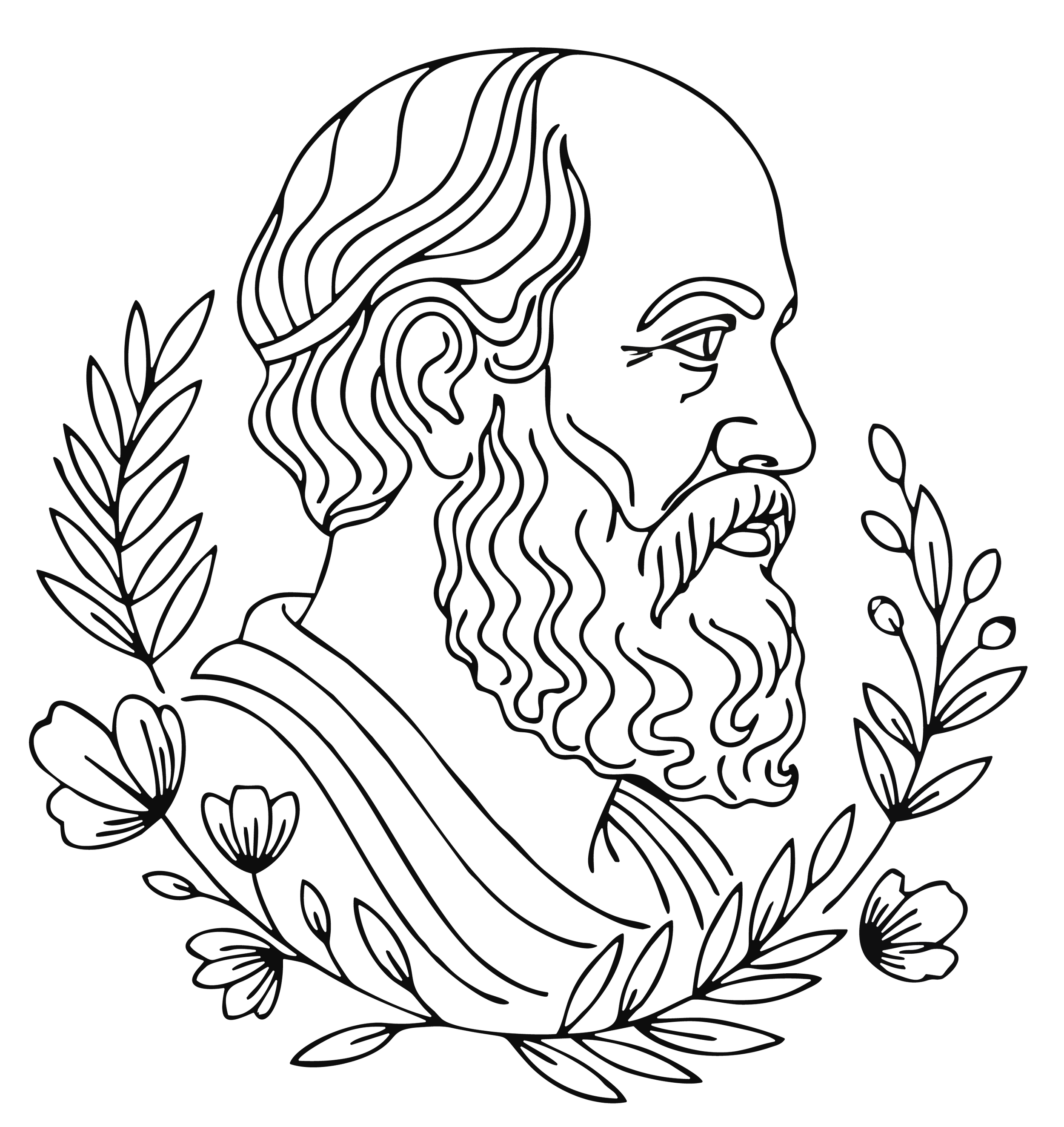
Aristotle
Beginnings as the Imitation of Action
In Poetics (c. 335 BCE), Aristotle identifies mimesis, the imitation of action, as the core of storytelling. For him, a good beginning is not a random starting point, but the logical entry into a chain of cause and effect.
“A beginning is that which does not itself follow necessarily from anything else, but after which something naturally is or comes to be.”
Here, the first line establishes the moment of causality, the spark that makes everything that follows possible. The function of a beginning, then, is to set emotional expectation and prepare the reader for catharsis (emotional release). In modern terms, Aristotle teaches us that a first line is not decorative; it’s the first motion of the dramatic arc.
The Classical to the Modern:
From Invocation to Intimacy
In epic poetry, openings were public acts of authority; “Sing, Muse, of the wrath of Achilles…” (Homer’s Iliad). The opening invoked divine legitimacy and announced subject matter. The reader (or listener) entered a sacred narrative frame.
By contrast, the novel, a product of the Enlightenment and individual consciousness, replaced invocation with intimacy.
The voice moved from the divine to the human, from “Sing, Muse” to “Call me Ishmael.” This shift marks a crucial historical transformation: the storyteller no longer speaks for humanity but from within it. The first line becomes a handshake, not a proclamation.
Wayne C. Booth:
The Implied Author and Narrative Trust
In The Rhetoric of Fiction (1961), Booth reframes the opening line as an act of ethical positioning. Every first line implies an authorial presence, what he calls the “implied author”, who sets moral and tonal expectations.
A first line like Austen’s “It is a truth universally acknowledged…” immediately tells us that the “implied author” is clever, observational, socially attuned.
Booth’s argument makes the first line not only aesthetic but ethical: it tells us whether we can trust the storyteller.
Roland Barthes: Seduction and the Desire to Read
Barthes, in The Pleasure of the Text (1973), reframes the opening as seduction. He argues that language must generate desire, the longing to know what comes next, without satisfying it too quickly. The first line, in this sense, is erotic. It promises meaning but withholds enough to sustain the reader’s curiosity.
“The text you write must prove to me that it desires me.”
Barthes’ view helps us understand why ambiguity and rhythm matter so deeply in openings. The first line isn’t about clarity alone; it’s about tension, the balance between revelation and restraint.
Gérard Genette – The Paratext and Threshold Theory
Genette’s Paratexts: Thresholds of Interpretation (1987) gives us the language of thresholds. He treats the first line as part of the paratext, the liminal space between the world of the reader and the world of the text.
Crossing this threshold requires ritual and orientation. The reader must be gently led into a new reality. The first line, therefore, performs a dual function: it invites entry and conditions reading. For example, Kafka’s “Someone must have been telling lies about Josef K., for he had done nothing wrong but one morning he was arrested” instantly signals an absurdist, bureaucratic nightmare. The threshold has been crossed, logic has been subtly rewritten.
Before the Sentence:
What I Didn’t See Coming
I’ll admit, I didn’t see it coming. When I designed our “First Line Fridays” session, I assumed everyone in the room already knew the mechanics of a sentence, the way a clause balances on its verb, how punctuation shapes breath. I thought we’d be playing with rhythm and tone, not grammar. But as soon as we started sharing those first lines, it became clear: some writers had never really been taught what a sentence does.
And why would they? Most of us learn to write through reading, imitation, or instinct. We can compose vivid paragraphs long before we can explain where one thought ends and the next begins. It’s a bit like a TV chef preparing a Michelin-star dish without first showing how to chop an onion. The fundamentals are assumed.
But here’s the truth: a sentence is the smallest complete unit of meaning we have. Everything in storytelling, from the quietest line of dialogue to the most sweeping emotional revelation, rests on that foundation. A story can survive a wobbly paragraph. It cannot survive sentences that don’t know what they’re doing.
That realisation changed the night’s lesson plan. Instead of diving deeper into voice, we slowed down. We broke apart the idea of a sentence, not as grammar drill, but as craft. Because if you can’t feel where a sentence begins and ends, you can’t control rhythm, or build tension, or let silence do its work.
And that’s where our deeper discovery began: finding the sweet spot where detail and brevity collide, where a sentence breathes without spilling over.
The Sentence: Precision, Breath, and Balance
The Sentence as a Unit of Thought
A sentence isn’t just grammar; it’s a gesture of cognition. It should capture one full thought, no more, no less. When a sentence runs too long, it starts carrying multiple, competing thoughts and loses direction. Too short, and it stutters before an idea can mature.
Aristotle’s lineage: Clarity is the highest virtue. A sentence must have a single governing verb and a single emotional or intellectual movement.
Run-ons vs. Rhythm
Long sentences aren’t inherently bad. Faulkner, Proust, and Cormac McCarthy all built symphonies out of them. What matters is control.
A run-on sentence drifts because it lacks internal architecture, no punctuation rhythm, no hierarchy of clauses.
A crafted long sentence moves with intention; punctuation and syntax guide the reader through a chain of thought.
Example:
Run-on: She opened the door and saw the light and it made her think of summer and then she started crying because she remembered her mother.
Controlled: She opened the door. The light hit her like summer, sharp, forgiving, the colour of her mother’s kitchen.
The difference is rhythm and focus, not word count.
The “Goldilocks Zone” of Sentences
Research into reader cognition (see Miall & Kuiken, 2002; Carver, 1990) suggests readers process meaning most effectively when sentences fall between 14–22 words on average. That’s not a rule, but a cognitive rhythm — roughly one breath, one complete idea.
Below 10 words → punchy, energetic, but risks feeling staccato.
Above 30 words → complex, immersive, but risks losing clarity unless punctuated and well-structured.
The sweet spot lies in variation: rhythm that expands and contracts to mirror emotion and pace.
Syntax as Music
Think of sentence length as tempo. Short sentences strike like percussion; long ones create melody and movement. Skilled writers orchestrate both. Hemingway alternated declarative beats with sudden lyric stretches. Toni Morrison and James Baldwin used syntactic layering to mimic thought and memory.
Guideline: Vary sentence length the way a composer varies notes, not for decoration, but to sustain attention and mood.
Sentence as Architecture
If a paragraph is a room, each sentence is a beam. You need both strength and spacing. Overbuild and it collapses under its own weight; underbuild and it won’t hold meaning. The art lies in proportion, giving each sentence enough space to breathe while carrying its share of the load.
The Stylistic Merits of Long and Short Sentences
One of the simplest tools a writer has (and one of the most powerful) is sentence length. When I asked for specific feedback regarding my Furphy Short Story, writer and judge Thornton McCamish said what stood out most was my clear grasp of understanding the mind of the reader. That my handling of sentence length and line breaks demonstrated an advanced technical skill in controlling pace and breath.
Sentences are more than the number of words/adjectives/verbs or characters. They do more than deliver information. They are the quiet metronome beneath every paragraph, dictating rhythm, emotion, and pulse. A reader may not consciously register the number of words, but they’ll feel the effect: breath, tension, intimacy, all shaped by syntax.
Short Sentences: Urgency, Impact, Control
Short sentences behave like drumbeats. They compress time, accelerate tension, and give the prose a physical pulse. In action, argument, or shock, short sentences mimic the body’s own responses — quickened heartbeat, shallow breathing, fight-or-flight focus.
Each word lands like a blow.
Each line feels certain.
There’s no room to hide.
Short sentences also build psychological pressure. They imply decisiveness, or panic. When characters think or speak in staccato bursts, we feel their urgency. Ernest Hemingway mastered this: He was dead. The fish moved. The boat rocked. Each sentence pulls the reader forward, never allowing them to rest.
Used sparingly, short sentences create impact. Used in succession, they create momentum. The trick is control, knowing when to let the rhythm sprint and when to let it rest.
Long Sentences: Reflection, Intimacy, Mood
Long sentences, on the other hand, stretch time. They invite the reader to linger, to drift through texture and thought. Where short sentences are the body in motion, long ones are the mind in meditation.
In a love scene, a moment of introspection, or a sensory description, long sentences build closeness. They mirror the wandering of emotion, the way a thought expands, circles back, or spirals inward. Toni Morrison, James Baldwin, and Virginia Woolf all use this elasticity to create intimacy. The reader is carried, breath by breath, through layers of perception.
She lay there for a moment, her breath still caught in the warmth he’d left behind, and the room — that small, familiar room with its half-closed blinds and slant of morning light — seemed to hum with the memory of something that hadn’t yet been said.
Long sentences slow the heart rate. They let atmosphere bloom. They invite empathy rather than adrenaline.
Balancing the Two
The most effective prose moves between lengths. A long sentence builds immersion; a short one breaks the spell. Together, they create rhythm — much like music alternating between melody and percussion.
In practical terms:
Short sentences = pace, tension, clarity, precision.
Long sentences = depth, intimacy, reflection, sensory richness.
Neither is better. Each serves a different psychological rhythm. The art lies in knowing when to let your reader breathe, and when to take that breath away.
Final Wrap
The first line is never neutral. It’s a designed psychological event, a collision of art, ethics, and cognition. Whether invoking the Muse or whispering “Call me Ishmael,” writers use that opening moment to establish the conditions under which belief, empathy, and suspense can exist.
Next month at The Writer’s Nest:
We’ll explore our voices in our first attempt to write in alternative Points of View.
First Person, Third Person, Past Tense, Present Tense, the limitless opportunities available to us as writers to tell our stories.
Then we’ll ask: How do you choose? What impact does that choice make? What are the rules and how can you break them?
Join the Facebook group to get involved.
